



At the recently concluded 13th China Network Audiovisual Conference, the YouTube Greater China team shared important insights at the forum on Digital Intelligence-Driven Innovation in Mass Culture and Global Distribution, highlighting key considerations around AI content compliance and creative practices.
2026 marks a major turning point. We are entering an era in which technological advances are reshaping the content industry at an unprecedented pace. As AI continues to transform content creation:
What are the key changes in YouTube’s algorithms and policies for AI-generated content?
What opportunities can the latest AI content data and industry trends reveal in 2026?
Today, YoyWow takes a closer look at how creators can navigate YouTube in the age of AI—helping you protect your channel, stay compliant, and capture the next wave of growth.

Massive Monetization Potential: Behind YouTube’s $100 Billion+ Payout

YouTube remains one of the world’s leading platforms for creator monetization.
According to official figures, between 2022 and 2025, YouTube paid out more than $100 billion to creators, artists, and media companies. Within this massive opportunity, short dramas and AI-generated animation are showing particularly strong growth potential:
- Short drama revenue doubled: In 2025, YouTube partners’ revenue from short drama content more than doubled.
- Strong female audience: Short dramas attract a predominantly female audience, with particularly strong performance in Indonesia, Vietnam, India, Thailand, the United States, and Malaysia.
- Growing opportunities in animation: YouTube sees significant growth potential in children’s animation and AI-generated animation, with another wave of growth expected in 2026.
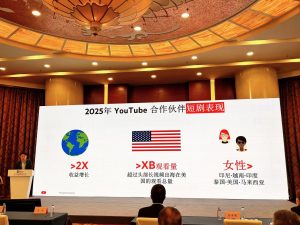
For creators, this means that once their content meets YouTube’s requirements and their channel is accepted into the YouTube Partner Program (YPP), eligible views can generate ongoing advertising revenue through AdSense, turning content into a long-term digital asset.

From “Generation” to “Assistance”: Don’t Become an AI Content Repackager
The YouTube team highlighted a key principle at the conference:
AI-assisted creation must evolve
from simple content generation to AI-assisted creativity.
If your workflow still looks like “enter a simple prompt → publish immediately,” your content is more likely to be identified as repetitive or low-value, and it can also be easily replicated by competitors.
The real competitive advantage lies in the process: Planning → Drafting → Prompting → Human Refinement → Publishing Technology cannot replace the fundamentals of good storytelling. Only by incorporating meaningful human input and using AI as a tool to improve efficiency can creators develop distinctive content and build a brand that is difficult to replicate.
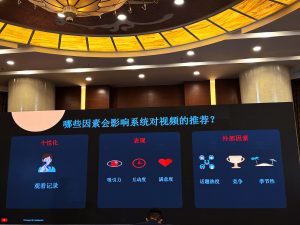
To help AI content break through on YouTube, creators first need to understand the fundamentals of the platform’s recommendation system. Based on the YouTube team’s presentation at the conference, whether a video achieves significant growth is largely influenced by three core factors:
Personalization
YouTube’s recommendation system takes viewers’ watch history and interests into account to recommend content that is more relevant to them on their Home feed.
Performance
This includes factors such as how appealing the video is, how viewers engage with it, and how satisfied they are with the viewing experience.
External Factors
Content performance can also be affected by topic popularity, competition from similar content, and seasonal trends.
Therefore, thumbnail optimization, content focus, and audience engagement can all directly influence how content is distributed. Managing these factors effectively requires a systematic strategy and continuous optimization. With more than a decade of experience operating YouTube channels, YoyWow has developed extensive industry expertise and a proven methodology to provide professional support for content creators.

Compliance First: Watch Out for These Three Major Channel Risks
As creators increasingly focus on compliance when taking content global, the YouTube team highlighted several areas that creators should pay close attention to.
Repetitive Content: When Quantity Becomes a Liability
Many creators use AI to mass-produce content with nearly identical scenarios, changing only the characters or making minor adjustments to the script—for example, simple animal compilations or repetitive family-conflict storylines. This type of mass-produced, low-value content can run into YouTube’s policies concerning repetitious or low-value content. If a channel is found to violate monetization policies, it may lose access to monetization through the YouTube Partner Program (YPP) and could face further enforcement action.
AI Disclosure: Transparency Comes First
This is another important requirement: creators should disclose realistic content that has been altered or synthetically generated with AI when required by YouTube’s disclosure settings. The YouTube team emphasized that making such a disclosure does not automatically reduce a video’s distribution or recommendations. The purpose is to help viewers understand when content may not represent real events, people, or places. Creators who fail to make required disclosures may face enforcement if YouTube determines that the content violates its policies.
Privacy and Copyright: A Zero-Tolerance Approach
Creators should not use AI to clone another person’s likeness or voice, or reproduce another channel’s distinctive content without authorization—including its background, overall creative execution, or scripts. YouTube’s Content ID system is designed to identify copyrighted material and help rights holders manage their content. Attempts to circumvent copyright protections can therefore carry significant risks.

YoyWow’s Take: Building a New Global Content Strategy
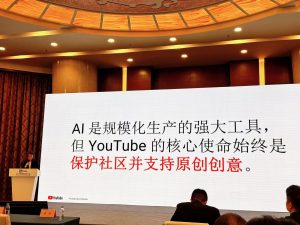
As AI reshapes the content landscape, Chinese companies going global are increasingly moving from taking products overseas to building global brands. At this critical turning point, YoyWow recommends that creators strengthen their competitive edge across three areas:
1. Lower Costs, Higher Efficiency—Without Sacrificing Quality ——AI can significantly reduce production costs and improve efficiency. But the resources saved should be reinvested in stronger storytelling, deeper script development, and more detailed storyboarding.
2. Localization Is Key Going global means more than simply republishing domestic content overseas. Creators need to move beyond literal translation and adopt localized adaptation and cross-cultural understanding, using local perspectives to tell Chinese stories in ways that resonate with international audiences.
3. Shift from Short-Term Traffic to Long-Term GrowthRather than focusing solely on individual videos and short-term traffic, creators should build sustainable channel growth through thumbnail optimization, content specialization, and meaningful audience engagement. The goal is to move from the performance of individual videos to the long-term compounding value of a strong content brand.
Compliance comes first, and content remains king. In an era of rapidly advancing AI, creators who understand the fundamentals, stay committed to quality storytelling, and use technology as a force multiplier will be better positioned to succeed in the global audiovisual landscape of 2026—and bring the power of Chinese creativity to audiences around the world.
